December 2025
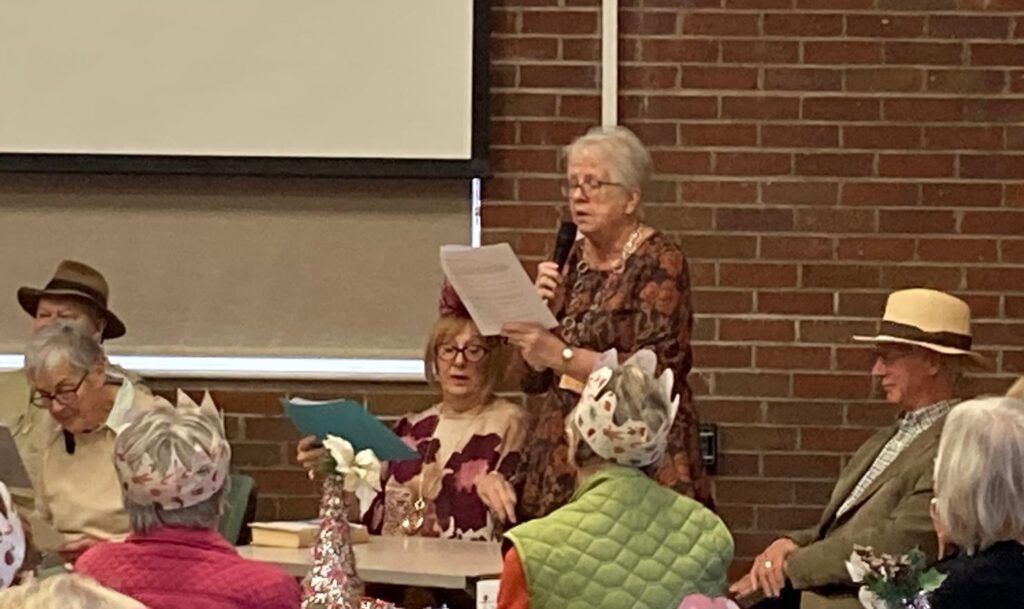
The Murder Mystery Radio Play "Suspicion at the Summer School" performed by the u3a Players
The renowned repertory company, The Redditch u3a Players, at last made a rare but welcome appearance at our Christmas general meeting. The Players were first formed during the pandemic by Malcolm Hall to entertain the members with their zoom appearances. It is not a regular interest group, but those of us who participate, do enjoy strutting our stuff from time to time.
On this occasion, Sue Smith, aided by Sue Gee, had written a radio comedy murder mystery play for the Players to perform. They were first inspired to do this when at a national u3a Summer School a few years ago (although I’m not clear who it was that they wished to murder there!).
And so it was that members of Ledslade u3a were attending some rather obscure classes at a u3a Summer School over which the snobby Maureen Harris, leading light of Ledslade u3a and National Chair, was presiding. Unfortunately, the resentful Vice Chair who had been pipped to the post by Maureen for the top role, was also there. And it turned out that every Ledslade member attending was nursing a deeply held grudge against Maureen. So, when Maureen collapsed early on in the play - and we all knew she’d been murdered, didn’t we? – which of these choice suspects was the guilty party?
Meanwhile, the guest speaker was none other than Orchid Marrang, that highly respected author of a series of ‘cosy’ murder mysteries…and unknown to those present, of some embarrassingly racy thrillers written under the pseudonym, Richard Morgan. Well, not unknown to everyone present! Who did know? Well, Maureen of course! And naturally, she was blackmailing Orchid with that knowledge.
At points during the play, the audience was invited to consider the clues, which included the information that Maureen was allergic to peanuts and that one of the suspects had been hoping to find out how to use poisonous plants to murder someone. And so, it was revealed in the final act, through the solving of some cryptic clues fortuitously left by Maureen, that Orchid was the murderer! And the weapon? It was revealed to be poisonous Lily of the Valley leaves sneaked into Maureen’s last meal of a delicious salad. The incontrovertible evidence, a large sprig of Lily of the Valley, was discovered in Orchid’s bag, along with a jar of peanut butter as Orchid’s back-up plan. The play concluded with the Ledslade u3a members much enjoying their citizens’ arrest of the routed Orchid.
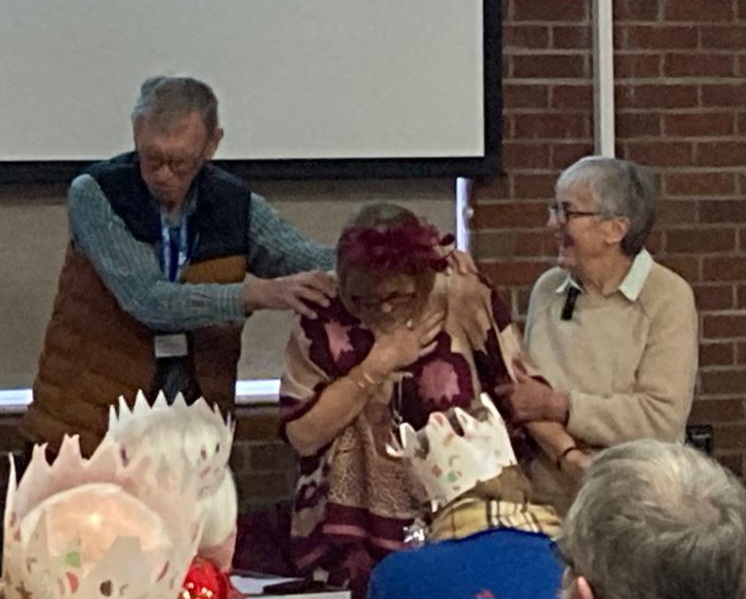
Before the big reveal, the audience had been given time to identify the murderer, motive and weapon. The winners were Linda and Trevor Magner, who received a large bag of Snickers bars as their prize. (They assured us they aren’t allergic to nuts.)
The performers were Sue Smith, Steve Lawrence, Chris Broadhurst, Jill Hitchcock, Gary Lacey, Ros Williams, Sue Gee, Murray Taylor and Sylvia Edwards. Sound Engineer was Louis Thomas.
Thank you, everyone, for writing, performing in and producing the play, and especially the audience for entering fully into the spirit of the occasion.
Reported by Sylvia Edwards


October 2025
'A Tour Around Georgian Worcester' - presented by Sandy Cale
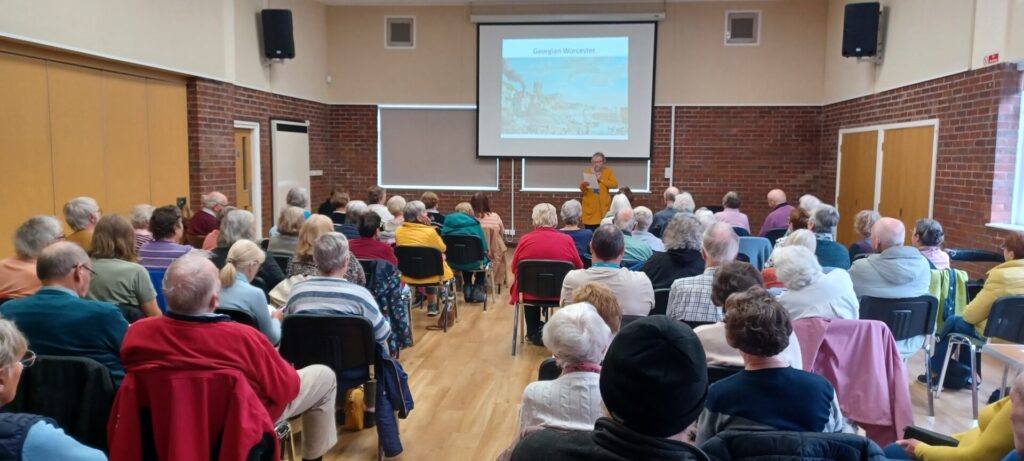
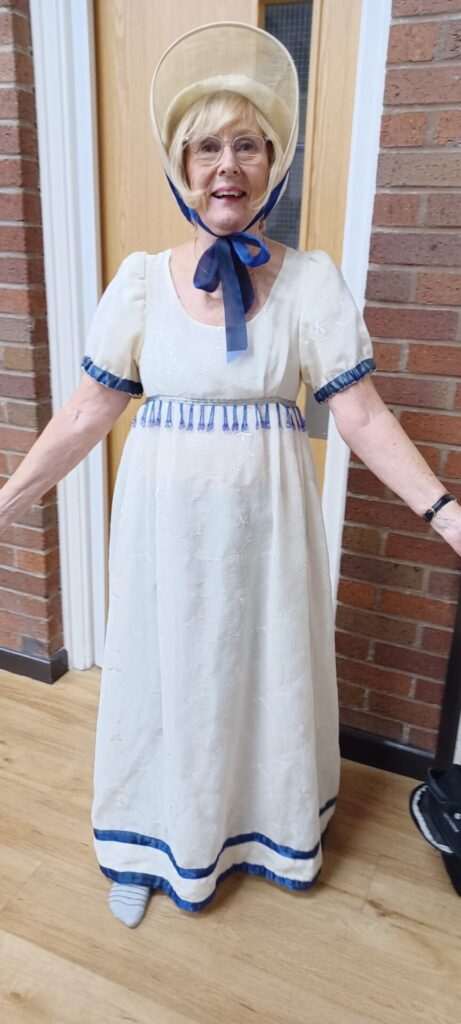
There was a splendid turn out for Sandy’s talk and the atmosphere in the large meeting room at The Bridge was lively as we awaited her appearance. After the words from Sue Gee, Chair, welcoming everyone and especially the several new and prospective members, we looked around for our speaker. She then made a dramatic entrance from a side door, wearing a long dress and bonnet that a Jane Austen heroine might have worn. Sandy told us she has been mistaken for Bo Peep in this outfit and her humour and personal anecdotes enlivened a fascinating armchair tour around the Georgian buildings of Worcester.
We learned a great deal about Worcester’s history and its architecture and were shown many detailed photographs and images which made us feel we were indeed touring the city. She told us about notable Worcester figures and the origin of familiar phrases such as ‘daylight robbery’ and ‘p*** poor’. Her own family history was an engaging background to a most enjoyable and memorable talk.
Reported by Sue Smith
September 2025
'Worcester Porcelain: A Collector’s Tale' presented by Colin MiIllett.
Those who had heard Colin talk in April - when he rescued us at the last minute after the arranged speaker was unable to join us - knew we were in for a treat. We learned the fascinating history of Worcester Porcelain, amply illustrated by slides and examples set out on a table at the front. He treated us to amusing details of the many painters and artists who contributed their skills to the lovely artefacts we saw. This was, however, no dull presentation of a factory’s history over 258 years. Colin brought it to life with entertaining anecdotes and by involving the audience, asking us to identify items from the Worcester factory and those from the supposedly inferior Locke factory.
The role of women in the factory - the subject of his previous talk - was included and we heard again how those gifted artists, paid half the wages of the men, rescued the factory’s fortunes in times of economic depression. Colin was accompanied by his wife, Frances, and they make a formidable double act. She told the entertaining tale of trying to prevent him from bidding for a particular item at an auction but being prevented by a bear hug from Will Farmer, the famous auctioneer. We could only admire her tolerance as Colin’s collection fills most of her dining room. Colin ended his talk by encouraging us to visit the museum in Worcester dedicated to its porcelain and challenged us to book a session where you can decorate your own piece. Anyone fancy themselves as the next Kitty Blake?
Reported by Sue Smith – Vice Chair
July 2025
'Geology' - presented by Georgia Jacobs
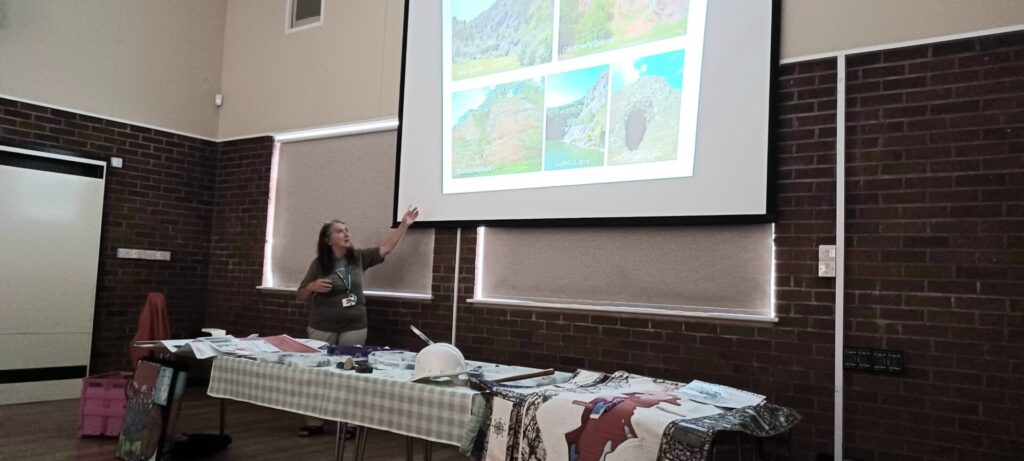
Our speaker at the general meeting for July was a most enthusiastic and knowledgeable Georgia Jacobs and the subject was Geology.
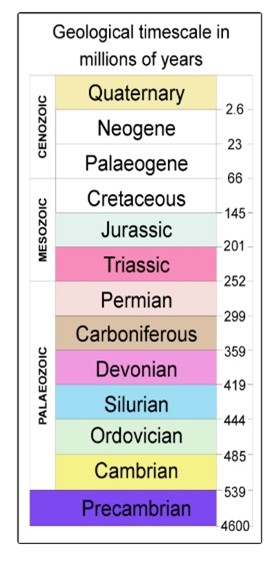
We learned about the fantastic Abberley and Malvern Hills Geopark which was created in 2003 and encompasses five counties: Gloucestershire, Herefordshire, Shropshire, Staffordshire and Worcestershire and of the earth history of 700 million years. So much of our lives are touched by geology, quarrying for the stone we make various uses of, mining for coal, the fauna and flora which live in the park and of the different types of stone laid down over the long period from Precambrian to the present day in what is in the Quarternary period, well past the times of the dinosaurs. Georgia well demonstrated all of the thirteen identified periods and showed a fine collection of minerals from them. She described how the folded layers over time had constructed the shape of the land today with stone laid down in different periods seeming to be confusingly out of place. She also fondly showed us a favoured and rare fossil trilobite Damantes which has been adopted as the logo of the Abberley and Malvern Geopark. She provided us with the opportunity to download further information from apps and has sent following link to access more information. https://webapps.bgs.ac.uk/memoirs/docs/B01615.html
The bgs refers to the British Geological Survey and this if accessed can tell you what the ground under your feet consists of. In addition to all of this the needlewoman in Georgia has produced some amazing textile work of patterns representing the beautiful, coloured stones to be found across the geopark Georgia is a volunteer guide at the Severn Valley Country Park should anyone visit it they may well find her there. Or maybe our keen walkers may choose to walk the Geopark Way 109 miles Bridgnorth to Gloucester.
By some means of skill and knowledge Georgia managed to fit 700 million years into a one hour presentation.
Reported by Margaret Toole
June 2025
'The Severn Freewheelers' - talk given by Pete Jzul
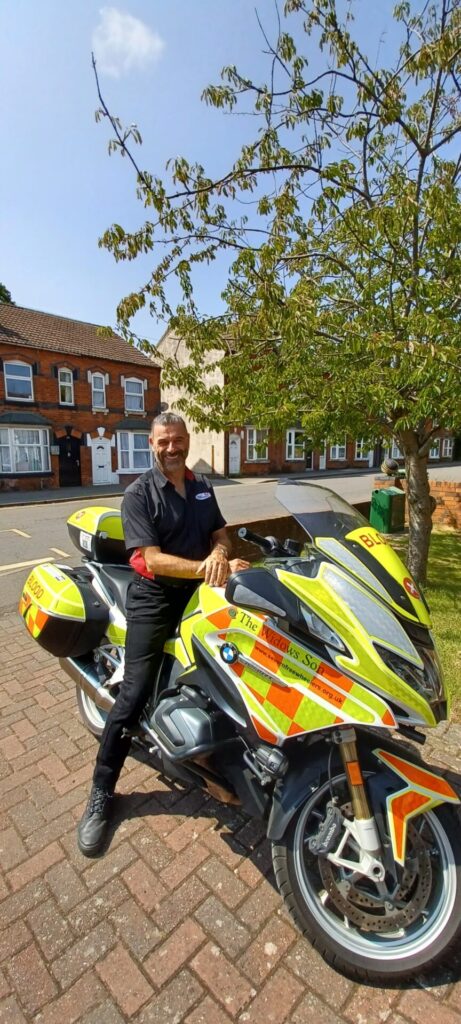
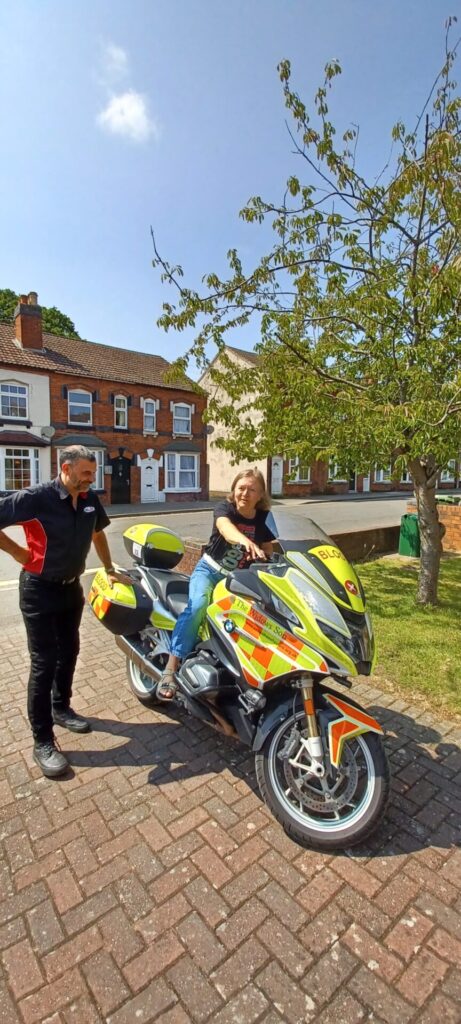
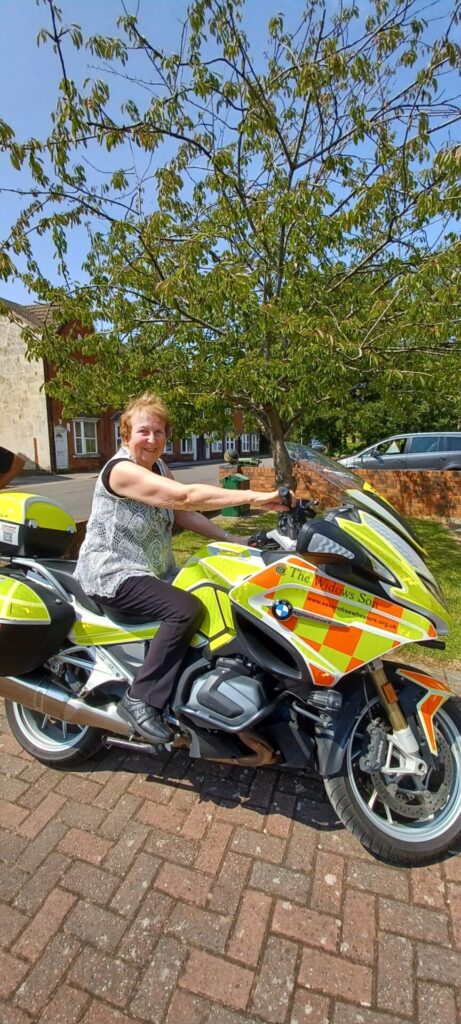
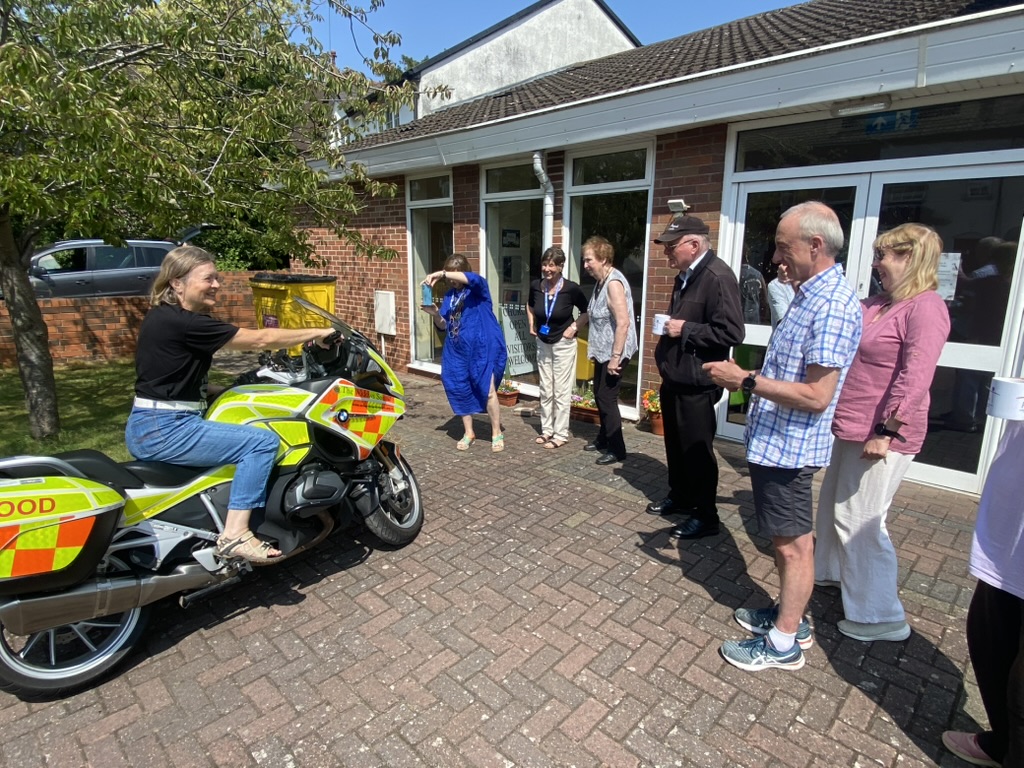
The speaker for the June general meeting was Pete Juzl, a motorcyclist who came to tell us all about his role in Severn Freewheelers. The Severn Freewheelers are a group of motorcycling volunteers who provide a brilliant service to the NHS by delivering urgent medical requirements to hospitals and patients. The bikers work a three/four day and night shift during a week with a volunteer controller taking the
calls and assessing the urgency or lack of that to direct the most efficient service that can be provided. Bikers may be dispatched to collect material from one major hospital to deliver to another and in the course of this often to hand the materials onwards to another motorcyclist from a similar group so that the whole of Great Britain and Northern Ireland can be covered. The materials they convey are not generally items destined for transplanting but tissue for testing and matching, medications urgently required to fulfil prescriptions and other such kinds of items.
Pete explained that this service without the voluntary group would have to be carried out by use of taxis and so there is a considerable saving to the NHS. In addition to this the bikers supply their own bikes and, in some circumstances, receive sponsorship from sympathetic companies as a motorcycle fully equipped for the purpose costs £23,000. He also said that in the winter for safety purposes they have the use of a van and again a sympathetic company allows its safe storage. He very kindly brought his motorcycle for us to have good look at and even invited sitting on it. It was a fascinating insight into the ‘good’ side of the biker’s life.
Reported by Margaret Toole
March 2025
'The Early Days of Local Radio' by Norman Wheatley
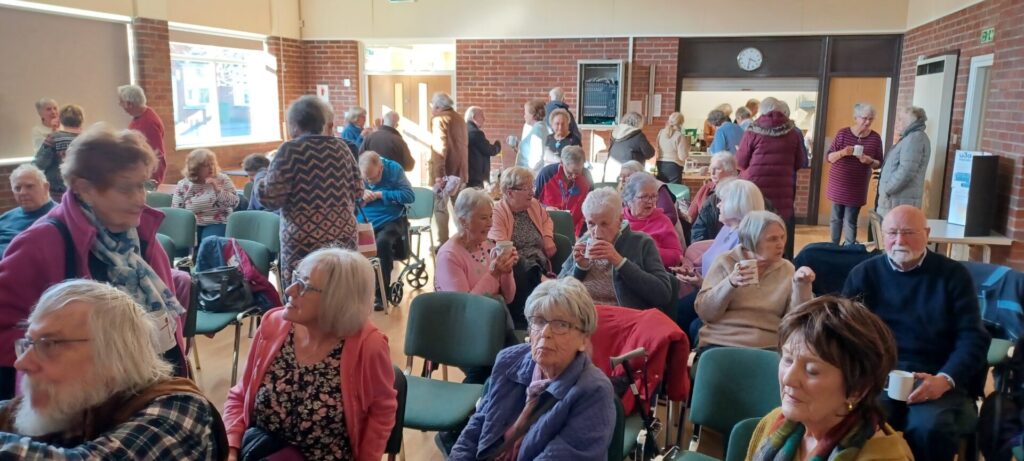
There was an excellent turnout for this popular speaker and appealing topic. The fun began as Norman tested the microphone and we could all see that this was his medium. We were given a brief history of the beginnings of BBC local radio which replaced the outlawed pirate radio from 1967. Whilst many local stations were set up in houses, Radio Birmingham was located in two corridors of Pebble Mill, still unfinished in 1970 when the new radio station began. Norman had completed work experience at Radio Leicester before obtaining a position in Birmingham, aged twenty. He put his success at that point down to having no discernible accent and, as he said somewhat modestly, “a good face for radio”.
We were privileged to learn a great deal about the workings of local radio and about Norman’s own rise within the station. He shared invaluable advice he had been given: 1: always remember that you are only ever talking to one person and 2: never swear in front of a microphone! We were shown pictures of early equipment and diverted by a rendition of ‘The Entertainer’ where sound effects had been spliced together, showing what could be achieved with sticky tape and a razor block. Norman’s encyclopaedic knowledge of popular music (see MiOT group) was explained when he told us that every piece of music played on air had to be logged with all its details recorded: that was his job.
In the concluding section of the talk, Norman showed a gallery of famous faces and invited us to choose some for him to talk about his encounter with them. Nana Mouskouri was friendly, elegant and articulate: Terry Hall a consummate professional. Ronnie Barker had delivered a Christmas message as Norman Fletcher, Hank Marvin had been very unassuming and Gene Pitney very nice. Norman told us that Les Ross was the most famous person (apart from Nick Owen) to come out of Radio Birmingham but I suspect for his audience on this occasion Norman will give them a run for their money! His re-creation of the mischievous moment a pre-recorded cow was inserted into a serious indoor conversation in The Archers will stay with this Archers’ Addict for a very long time!
Thank you, Norman, for an extremely entertaining afternoon.
Reported by Sue Smith

January 2025
'Hitting all the Right Notes: The History of the Clarinet'by Bill Sumner
This talk at the General Meeting on January 21st was a treat for real music-lovers and for the relatively uninitiated, like myself. Bill spoke engagingly, from his long experience as a teacher - and player - of the clarinet, bringing to life the history of woodwind instruments for his audience. He explained the difference between the different instruments and introduced us to a lovely new word - embouchure - which refers to the mouth position required to play each instrument. Apparently the simple fixed reed instruments which preceded the clarinet go back to Ancient Greece and Egypt. The clarinet, however, was not a natural evolution from these instruments but invented, around 1700 in Nuremberg by Denner who added a register key to the earlier chalumeau.
We were invited to listen to concert pitch and compare it with the clarinet which - as we could hear - functions at a tone lower than concert pitch. Its register key gives it more flexibility than other woodwind instruments as it plays twelve, rather than eight, notes higher. Despite this, there were relatively few pieces composed for the clarinet in the baroque period when the oboe dominated. Mozart, however, wrote for the clarinet and we were treated to excerpts played through the sound system and shown onscreen (Thanks to Louis Thomas and Sue Gee for this technical development) from The Clarinet Concerto in A Major and The Clarinet Quartet in A Major. Lovely.
By the nineteenth century the clarinet was well established as a concert instrument and Adolph Sax developed the clarinet into the saxophone. This was also rapidly accepted as an orchestral instrument and we listened to more lovely excerpts shown onscreen: Glenn Miller’s Moonlight Serenade and George Gershwin’s Rhapsody in Blue. The long-awaited climax of the afternoon was Bill’s own playing of Moon River (which demonstrated jumping from the chalumeau notes to the higher register) and Acker Bilk’s Stranger on the Shore. This was a lovely afternoon and the questions following his talk and the interest in the various instruments and images displayed for us to browse showed how much the members appreciated Bill’s talk. Thank you, Bill.
Reported by Sue Smith